[Case 03]
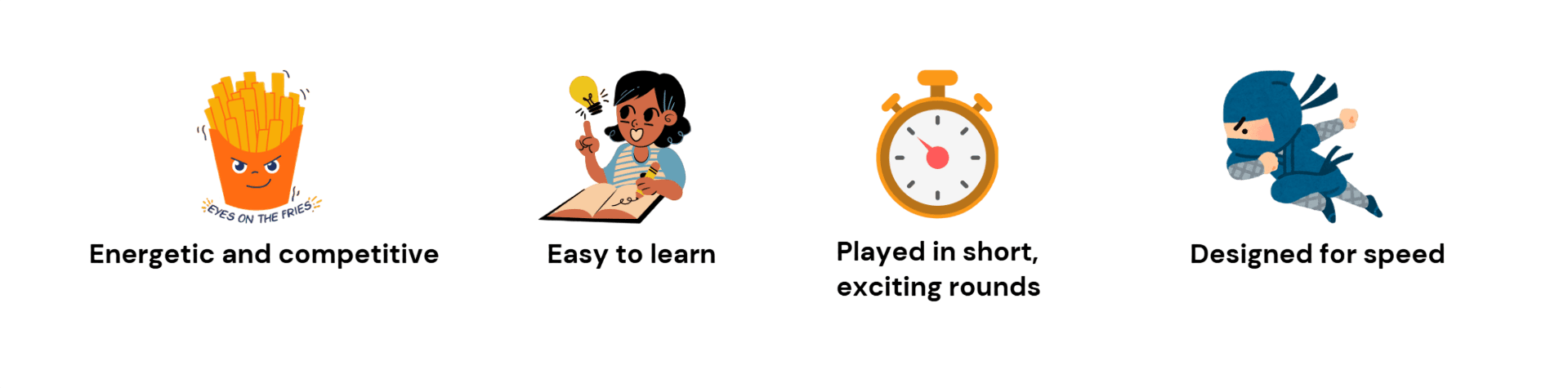
GoPuck! Fast Hands. Sharp Mind. One Winner..
Tabletop Gaming
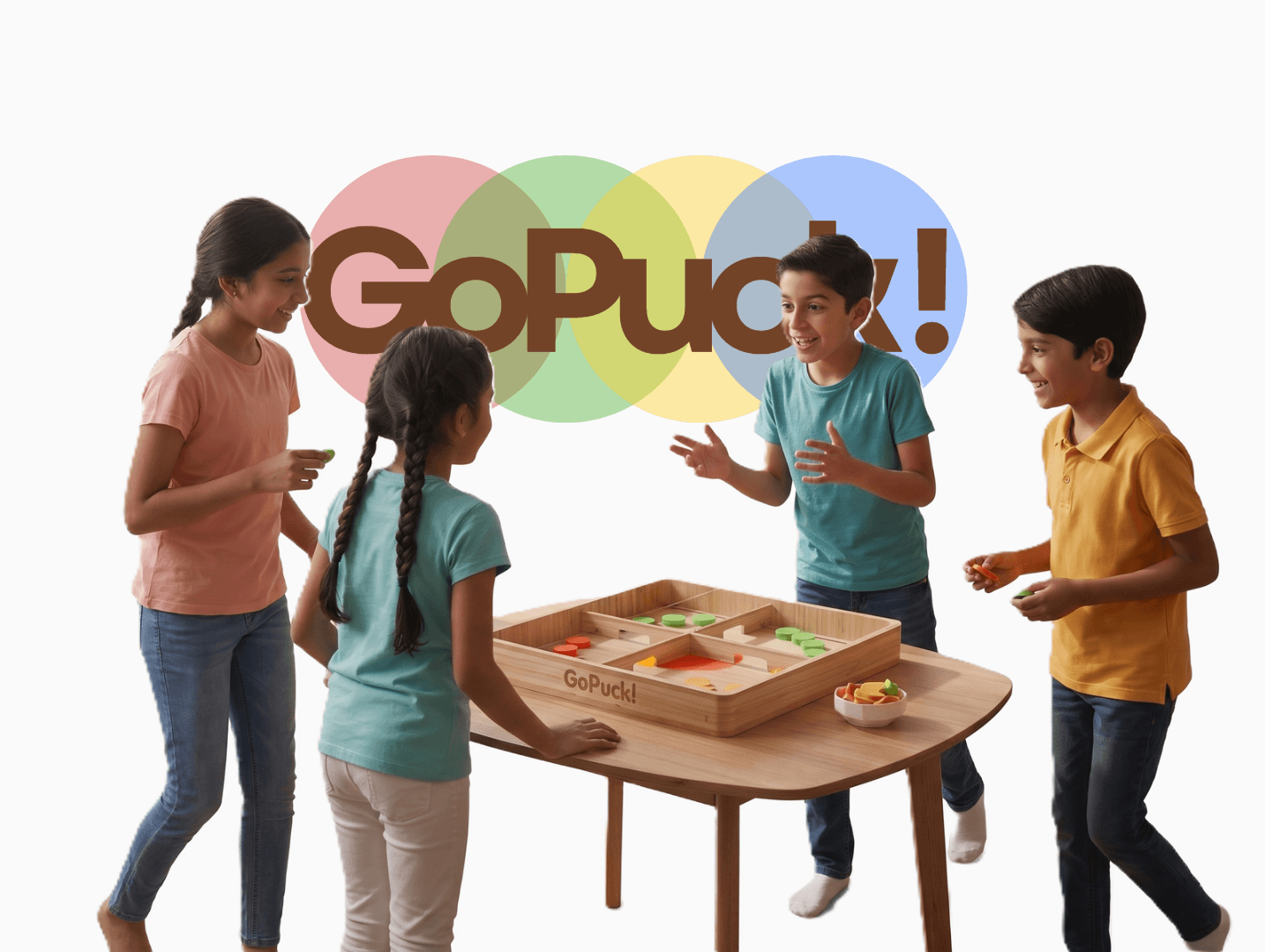
GoPuck! — A Fast-Paced Multiplayer Action Board Game
Designing a high-energy indoor game that combines reflex action, strategy, and competitive multiplayer gameplay for children aged 7 and above.
[Project Overview]
GoPuck! is a fast-paced, action-filled indoor tabletop game designed for 4 players. It was developed to solve a common problem in indoor gaming: turn-based waiting. By combining simultaneous play with a territory takeover mechanic, we created an experience where every second matters and energy levels remain nonstop.
[Problem Statement]
Most indoor games are either too static or involve long periods of waiting for a turn. Our goal was to design a game for children aged 7+ that encourages physical movement and quick thinking. We needed to bridge the gap between simple 'luck' games and slow 'strategy' board games .
[Industry]
Tabletop Gaming
[My Role]
Core Gameplay Lead
[Platforms]
Wooden Board Game
[Timeline]
1 Week
[Exploration]
[Process]
[01] Exploration
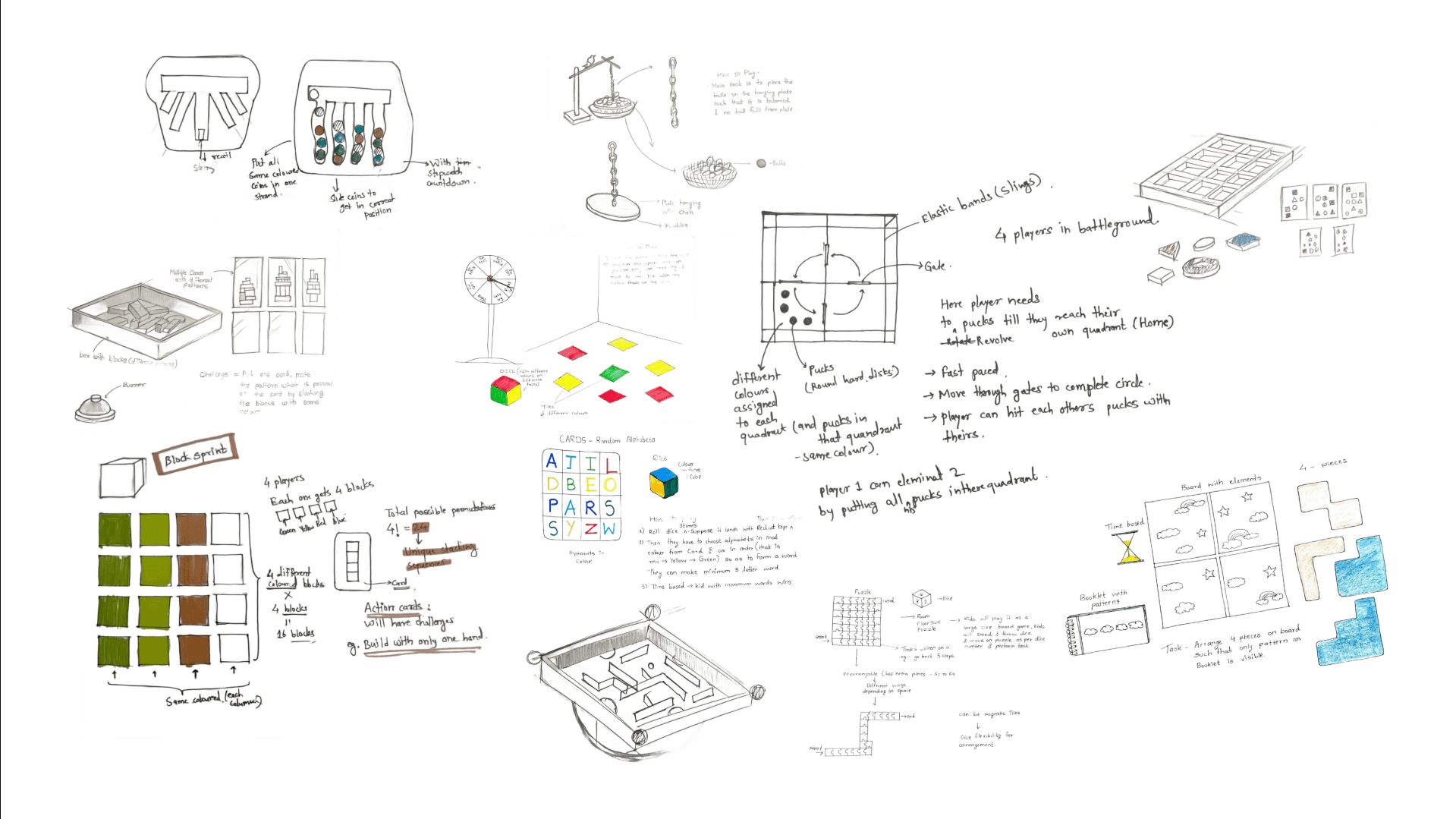
Sketched out multiple potential product concepts , letting the mind wander free in ideas.
[02] Concept Fusion
We merged the high-speed elastic mechanics of Sling Puck with the strategic circular progression of Ludo . This created a unique loop where players must attack and defend simultaneously.
[03] Physical Prototyping
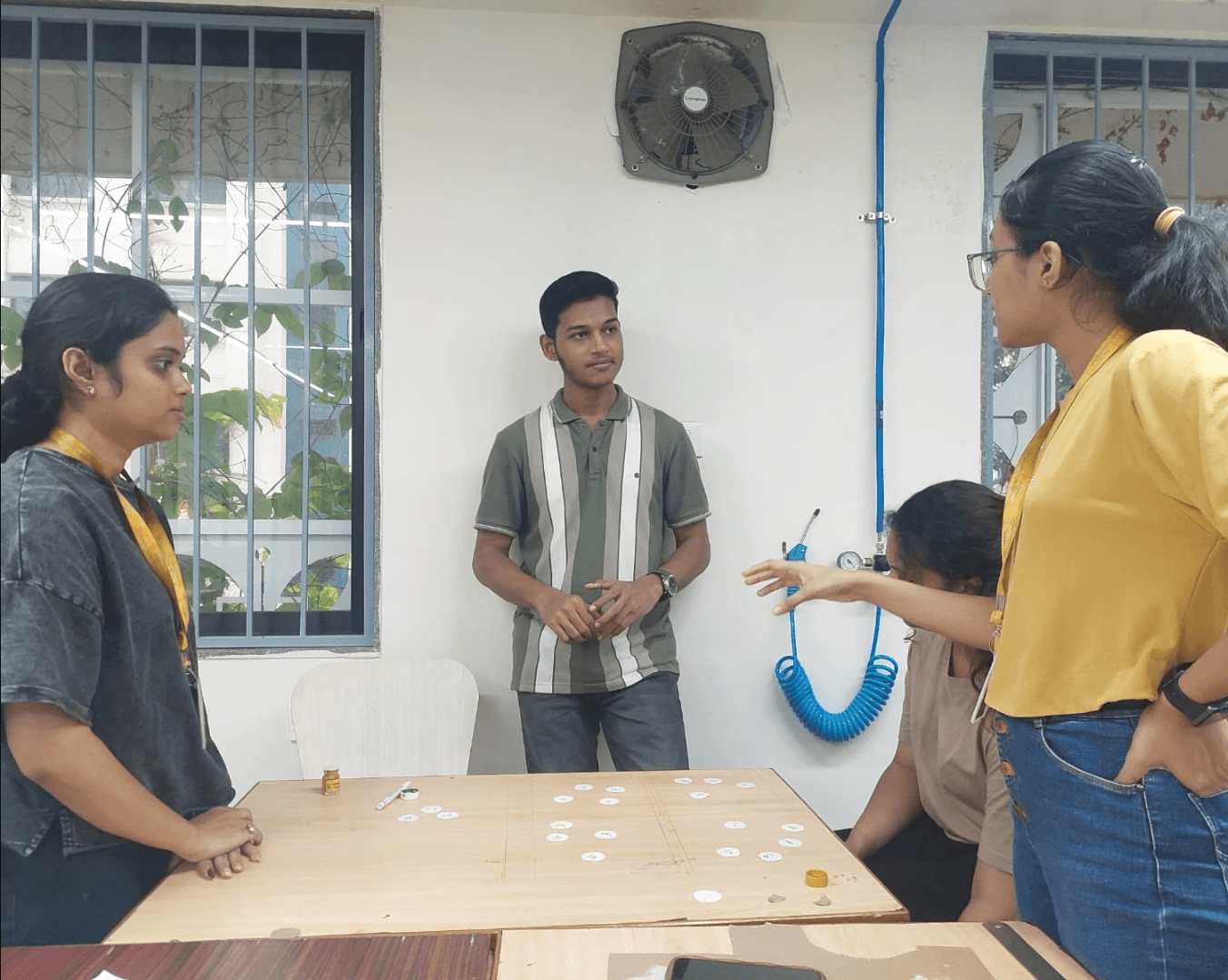
The project moved from sketches to dimensional drawings and finally into a 54cm × 54cm wooden board. We tested gate sizes and string tension to ensure smooth puck movement .
[04] Social Validation
We debuted the prototype at a college exhibition where it drew nonstop engagement. Players described the experience as 'intense' and 'chaotic fun'.
[Process]
[Outcome]
Nonstop play during the exhibition with players queuing for repeat rounds .
Successfully eliminated 'waiting time', all 4 players remain active at all times.
The wooden prototype survived high-intensity stress testing by players.
[Key Learnings]
Designing for engagement is about rhythm
Fast gameplay loops and constant interaction helped maintain excitement throughout the experience.
Physical interaction changes emotional intensity
Unlike digital games, physical movement and direct interaction created stronger reactions and competitiveness.
Simple mechanics can create complex gameplay
Although the rules are easy to understand in first game , player behavior makes every round feel unpredictable.